
Story · Trades · New construction
A new shop, then a new office, planned from the PDF of the drawings
It started with an email and a PDF of the plans. That is the best possible way for one of these to start, because everything is still cheap to change when it exists only on paper.
The situation
A contractor building a new shop, and then a new office after it. Two builds, one after the other, on a working site.
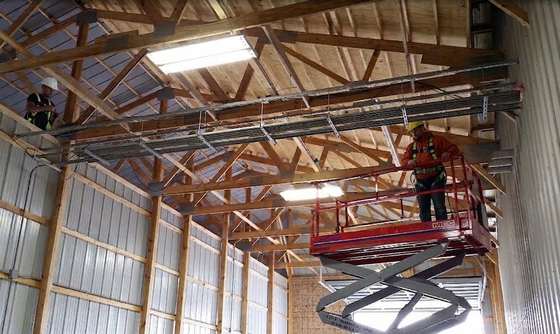
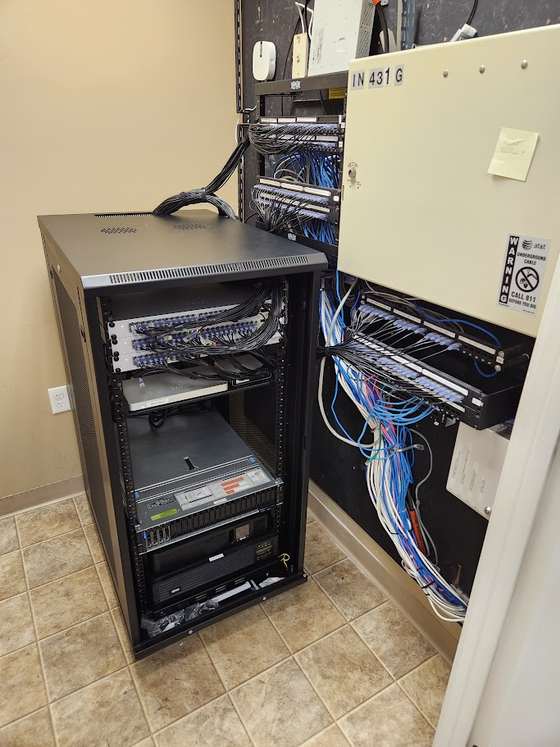
The decisions that matter in a new building are made months before anyone plugs anything in, and most of them are not really IT decisions at the time they get made. Where the drops go. How many. What the server room needs in the way of power, cooling and space. Where the conduit runs before the walls close up.
The expensive version of this project is the one where nobody asks those questions until the drywall is finished.
What we did
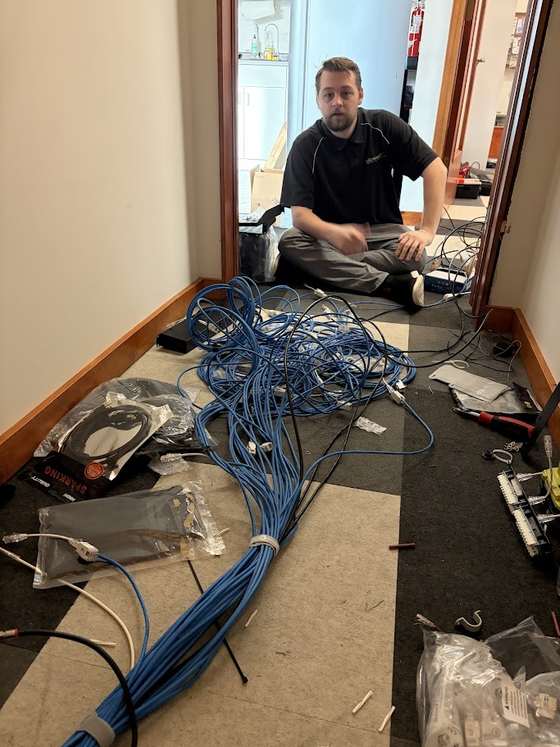
We walked the whole thing from the drawings. Where every data drop lands and how many there should be, allowing for the cameras and the extra equipment that always arrive eighteen months later. What the server room needs. How the logistics work while the site is still a building site.
The interesting decision was how to link the buildings. Point-to-point wireless, which is fast to deploy and has no trench, against buried fiber, which costs more up front and then lasts effectively forever. We laid out the honest pros and cons of each rather than recommending the one we would rather install.
We also built in the capacity to expand later, because the cheapest time to run conduit is while the floor is open and the most expensive time is any time after that.
And then we accommodated for issues that arose out of decisions the client made that went against our recommendations. That is part of the job too.
"We gave the recommendation, in writing, with the reasoning. They went a different way on a couple of things, so we planned around it and made it work."
Ryan Sanders, Partnership DirectorWhat changed
ResolvedTwo buildings that work, with the infrastructure to add to them rather than rebuild them. Cameras went in later without a single wall being opened.
The client also has something most businesses do not have after a build: a written record of what was recommended, what was chosen, and why. That document is worth a great deal three years later when somebody asks why a thing is the way it is.
The guide behind this story
ChecklistThe office IT relocation checklist
Everything that has to happen, in order, from the day the lease is signed to the first Monday in the new building. The list we use on every move.
Read the guideOrder the internet circuit the week the lease is signed. Carriers take six to twelve weeks. Nothing else on a move fails as often.
The relocation checklist Did you knowA backup that has never been restored is a hope, not a plan. Ask for the date of the last tested restore.
What to actually testQuestions people ask about this
When should IT get involved in a new build?
When the drawings exist. Data drops, conduit and the server room are cheap on paper and expensive in drywall.
Wireless link or buried fiber between buildings?
Fiber if you can afford the trench and you intend to stay. A point-to-point link if the distance, the terrain or the budget make digging unreasonable. Both are legitimate; the wrong answer is picking without being told the trade-off.
What if we go against your recommendation?
We put the recommendation in writing, you make the call, and then we plan around the decision you made. It is your building.

"Draven was great!"
Jake, insurance brokerageMeet Draven- A technician who knows your setup takes every request. Not a dispatcher, not a queue.
- Every closed ticket is surveyed and a partner reads every response.
- 99.5% of surveys come back positive.
- Family-owned since 2005. 21 years in the same corner of Wisconsin, not going anywhere.
"Thanks for the hard work. I was kept informed with regular updates until the concern was resolved."
Jeff, insurance brokerageBuilding something?
Send us the PDF. The earliest conversation is the cheapest one you will ever have about it.
Talk to a partnerTalk to a partner, not a sales script.
Tell us what is going on. A partner will call you back the same business day, look at what you have, and tell you honestly whether we are the right fit. No pricing pressure, no pitch deck.