
Story · Transportation · Disaster recovery
The building burned down. The server was still running.
The call came on a Sunday, to somebody driving home from holiday in another state. The owner said the building had burnt down. He started making calls from the road and was on site the following morning.
The situation
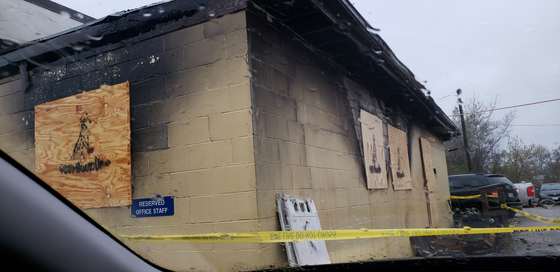
A spark in an outlet in the bus driver area started it. There is video of the fire going up the wall. The building was a total loss.
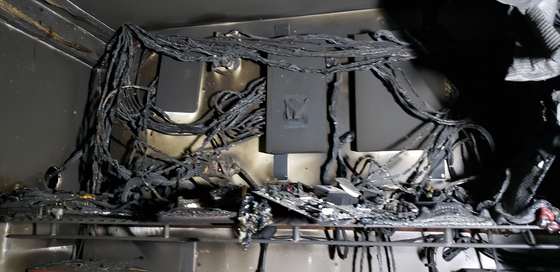
Their server was inside. It took smoke damage where it sat, then the fire department's water, and then the ceiling collapsed on top of it. When we reached it, it was still running.
Their internet came into the site over a point-to-point wireless link from another building, which turned out to matter more than anyone had expected when it was installed.
What we did
The servers came out of the burnt building and moved to the far end of that wireless link, which meant the company had systems again while it still had no premises.
The client bought a trailer and worked out of it for about a year and a half while temporary lines went in and the office was rewired. We kept them running out of a trailer for eighteen months.
The backups existed and were good, which is the boring half of this story and the half that decided it.
Then the part nobody photographs. Every lost piece of equipment categorized. Replacement and installation costs built up line by line. Everything quoted with full specifications, and the claim supported end to end with the adjuster, item by item, including why particular licensing could not simply transfer to replacement hardware.

"Most IT companies will rebuild after a fire. Fighting the adjuster line by line, with service tags and licensing rules, is the part that shows up in nobody's brochure."
How the service team puts itWhat changed
ResolvedThe company never stopped operating. Buses ran, schedules held, and the office worked out of a trailer until the building was ready.
On the insurance side they were made whole on the technology, which does not happen by itself. It happens because somebody sat down and documented every line in a form an adjuster could approve.
Order the internet circuit the week the lease is signed. Carriers take six to twelve weeks. Nothing else on a move fails as often.
The relocation checklist Did you knowA backup that has never been restored is a hope, not a plan. Ask for the date of the last tested restore.
What to actually testQuestions people ask about this
Would our backups have been enough?
The question is not whether you have backups. It is where the copies are, how fast they come back, and who is going to run the recovery while you are dealing with a fire. That gets written down before the bad day, not during it.
Does IT really get involved in an insurance claim?
We do. The claim is where a business either recovers its money or does not, and the technology line items are the ones nobody else in the room can specify.
How long can a business run out of temporary space?
Longer than people think, if the systems were moved properly. This one ran about eighteen months.

"Such a speedy response to my emergency. Thank you Midwest IT. Your company always exceeds my expectations."
Client, 2024 surveyMore from the survey wall- A technician who knows your setup takes every request. Not a dispatcher, not a queue.
- Every closed ticket is surveyed and a partner reads every response.
- 99.5% of surveys come back positive.
- Family-owned since 2005. 21 years in the same corner of Wisconsin, not going anywhere.
"Thanks for the hard work. I was kept informed with regular updates until the concern was resolved."
Jeff, insurance brokerageHave you ever tested the bad day?
We will write the plan with you and then run it, so the first time is not the real one.
Talk to a partnerTalk to a partner, not a sales script.
Tell us what is going on. A partner will call you back the same business day, look at what you have, and tell you honestly whether we are the right fit. No pricing pressure, no pitch deck.